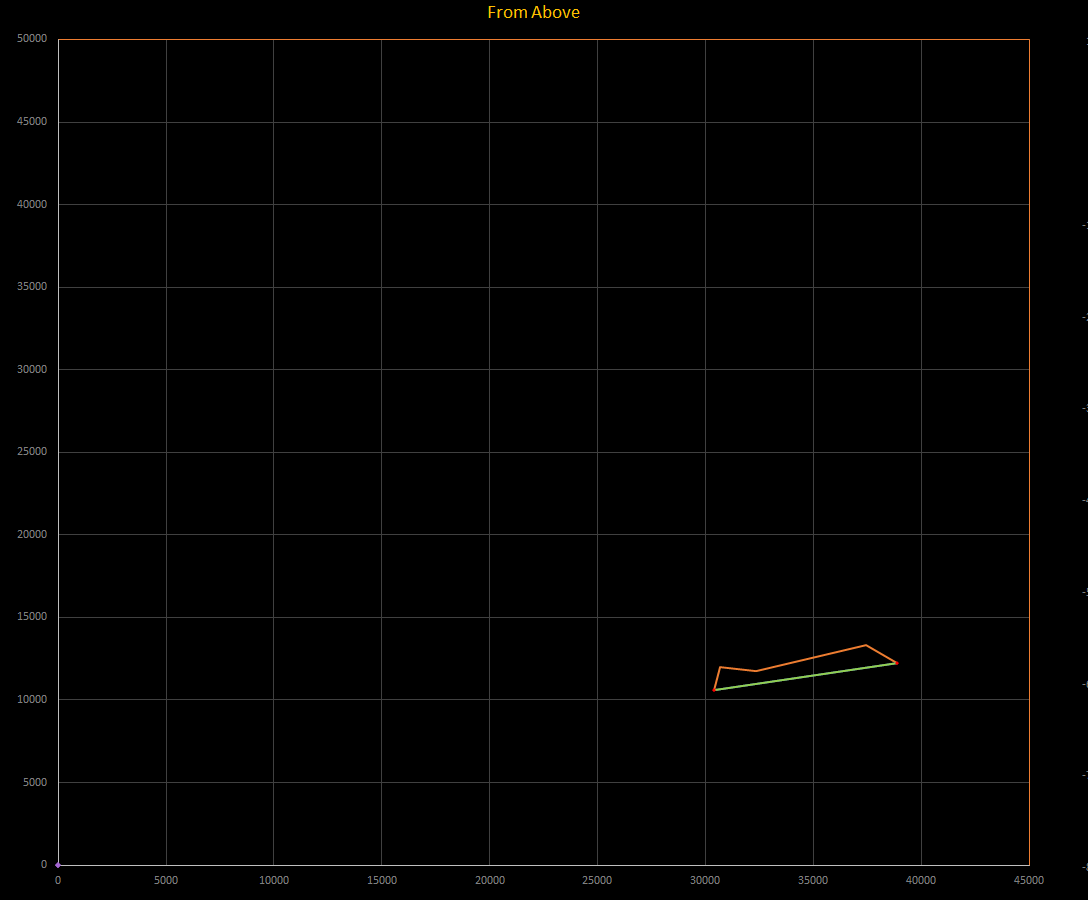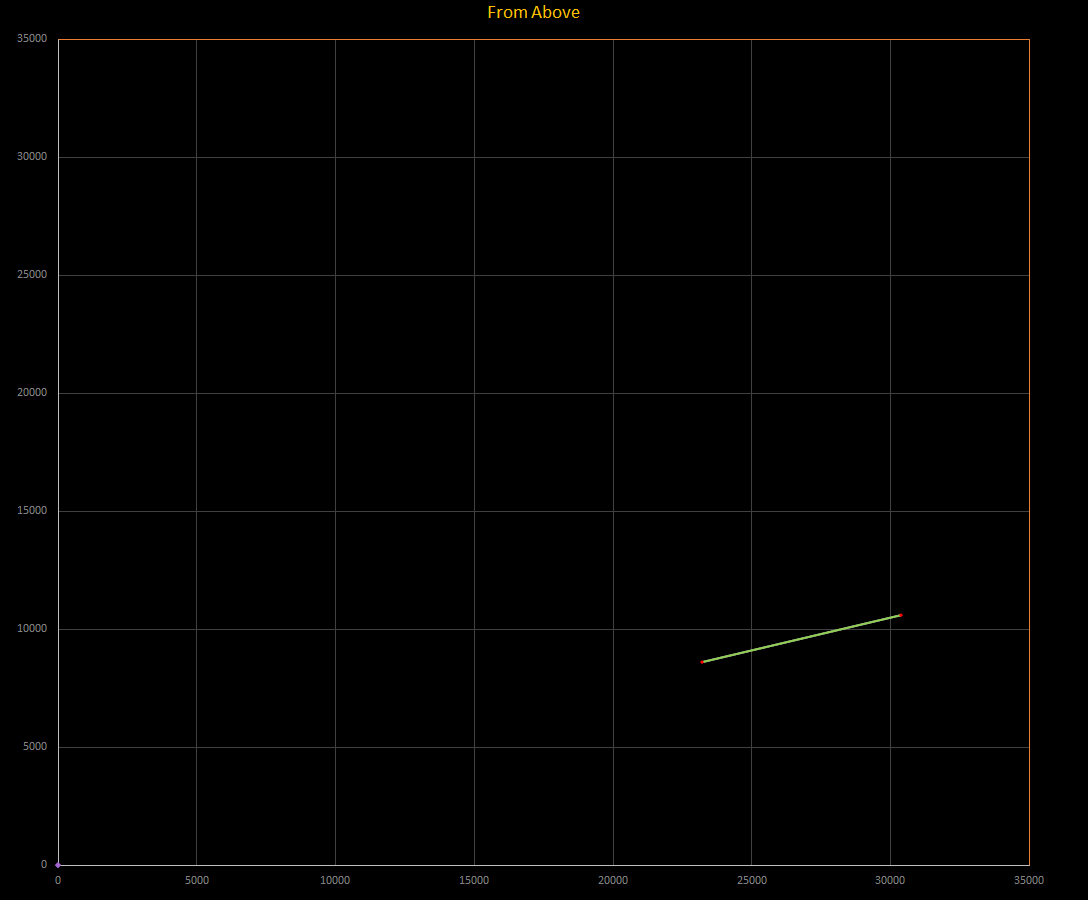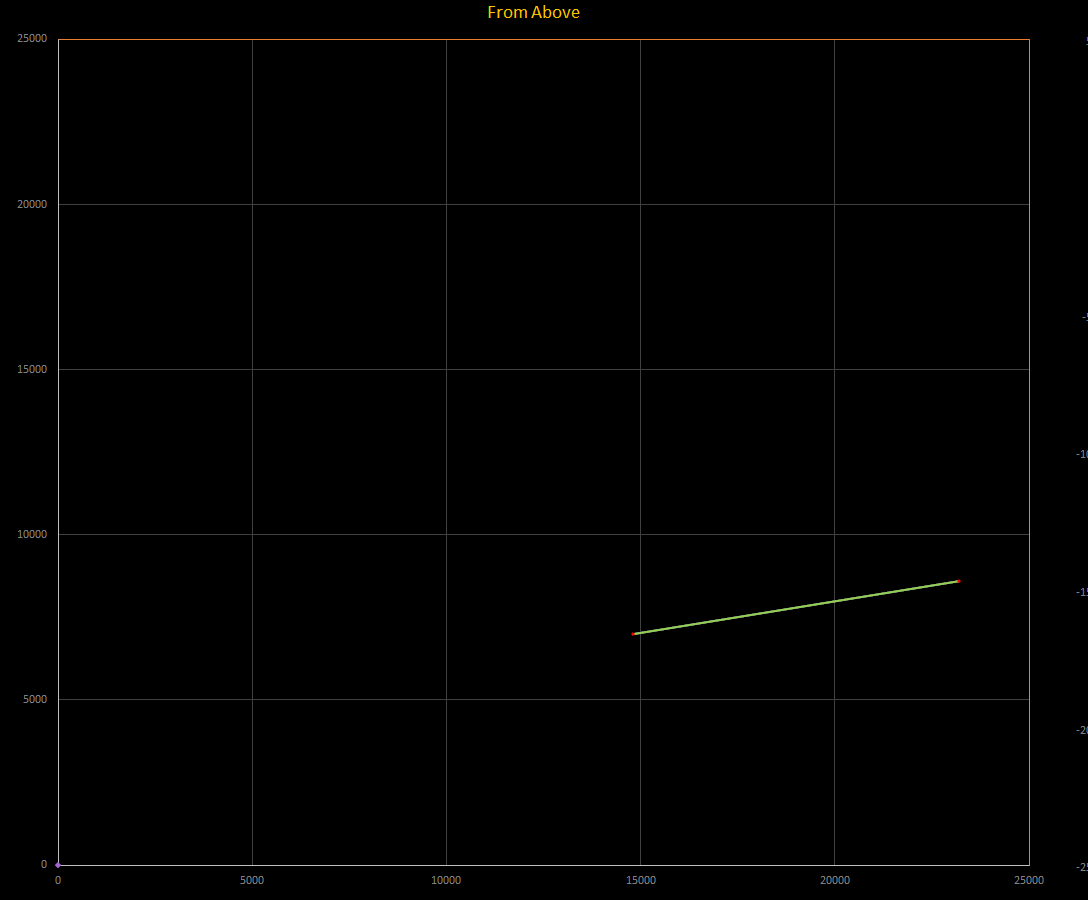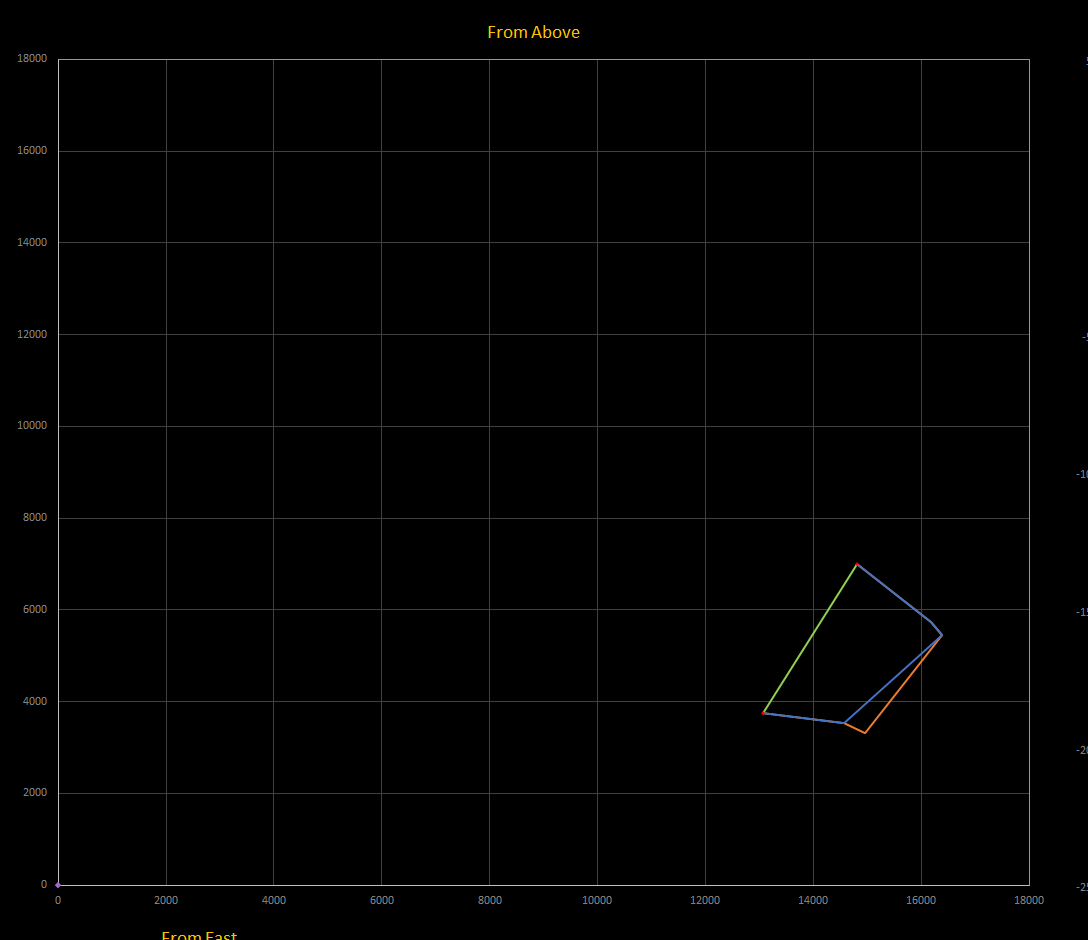
Leg 5 begins the “Discovery” phase of the expedition. We are starting to enter areas of space that have been sparsely explored, and as such there are not many points of interest already known to the Galactic Mapping Project or the Galactic Exploration Catalog on the line between GU Muscae and V429 Carinae.
From this point the expedition will focus on finding new sights and discoveries for submission into the Galactic Exploration Catalog, which can be found at https://edastro.com/gec
Legs 5, 6, and 7 will each be two weeks in length. Convening at certain locations along the way for mass jumps! Legs 5 and 6 there are no waypoints besides the basecamps themselves. For Leg 7, the final leg, there will be a few optional waypoints leading up to our final destination at V429 Carinae
Go get your name on something really awesome CMDRs!
Dates
Start Date: February 4, 2024 End Date: February 18, 2024
Map References quick reference list, more details below
Prie Aec IX-L d7-6
Main Waypoints Details
Map Reference: Prie Aex IX-L d7-6
This system is our stopover for exploration in this region, it features a terraformable water world as well as an ammonia world amongst it’s selection of planets.
We being leg 4 of Celebration of Early Astronomy 6, which is the last single week length leg of the expedition. We have a few more real celestial objects along this leg. The legs after this one will be two weeks in length and focus on discovering new noteworthy points of interest in the eastern reaches of the galaxy.
Dates
Start Date: January 28, 2024 End Date: February 04, 2024
Map References quick reference list, more details below
NGC 3199 Sector LC-V c2-5
OGLE-TR-211
AG Carinae
GU Muscae
Main Waypoints Details
Map Reference: NGC 3199 Sector LC-V c2-5
POI: NGC 3199
NGC 3199, also known as The Banana Nebula is an emission nebula in the Carina constellation region of the sky. It was discovered by James Dunlop in 1826. It was originally thought to be a bow shock of it’s central star WR 18, but has since been determined to have been formed due to the composition of local space, not the star’s movement.
OGLE-TR-211b is a known exoplanet, a hot Jupiter in a very close orbit with it’s parent star OGLE-TR-211. It is estimated to be slightly more massive than Jupiter. at 1.03±0.2 Jupiter masses.
AG Carinae is luminous blue variable star in the Carinae constellation region of the sky, and is one of the most luminous stars in our galaxy. However, due to it’s distance of roughly 20,000 lightyears from our solar system, all the stellar dust between us and it makes it generally not visible to the naked eye despite how bright of a star it is. The star has a planetary nebula of material that has been ejected from the star. It is in a transitional period going from being a class O supergiant star to becoming a Wolf-Rayet star.
There has been some recent data grom the Gaia mission however suggesting that AG Carinae may actually be close to our own solar system than the previously believed 20,000 lightyears, but it is still up for debate which value is the accurate value.
GU Muscae, also known as Nova Muscae 1991, as well as GRS 1124-683 is a star system containing a black hole candidate. The system was discovered by both the Russian Granat satellite and Japanese Ginga satellite on January 9, 1991 when the system produced an outburst of x-rays. The black hole is estimated to be 7 times as massive as our sun with a companion star it is taking material from that is three-quarters the mass of our sun. The companions star likely was a more massive star before, but has its outer layers blown away by the supernova that resulted in the creation of the black hole.
Map References quick reference list, more details below
HD 92023
NGC 3199 Sector LC-V c2-5
Smoju DA-Q d5-2
OGLE-TR-211
AG Carinae
GU Muscae
Optional Waypoints Details
Map Reference: Smoju DA-Q d5-2
POI: Smoj Crystal Fields
The Smoj Crystal Fields, while not a real celestial system, are worth a visit if you would like. Many systems around this system contain Notable Stellar Phenomena points of interest containing icy and metallic crystals of various varieties. Refer to the EDSM page for this system for the full list of nerby systems with NSPs.
There are a few optional waypoints on this leg as well as the two main waypoints. The gaps between waypoints at times have a long distance between them so feel free to explore in those gaps and looks for any other cool points of interest and sights to see that may be suitable for submission to the Galactic Exploration Catalog!
Dates
Start Date: January 21, 2023 End Date: January 28, 2023
HIP 51899 is a giant star located in the Carina constellation region. It is an M class star (although shown in game as K for some reason), and one of the colder known main squence stars in the universe at a temperature between 2,400 and 3,700 Kelvin based on it’s M1II spectral type.
Map References quick reference list, more details below
PCYC 17
DETWC Tr 14 J104348.8-593236
206 G. Carinae
GCRV 6432
HD 92023
Optional Waypoints Details
Map Reference: PCYC 17
POI: Pan-Carina YSO Catalog
The PCYC catalog is a survey of 1,439 young stellar objects in the Carina complex. This is one star of many in this region that is listed in game via their PCYC catalog number. This star like many others of this catalog have only been cataloged by this specific survey.
DETWC Tr 14 J104348.8-593236 is a young star in the NGC 3372 cluster. It also appears to be the only DETWC catalog (De Gioia-Eastwood+Throop+Walker+Cudworth) star in the in-game galaxy. I’m adding it as an optional waypoint as a curiosity to see what is there. There are a fair few other real stars in the 2MASS and PCYC catalgs around this star system as well.
This appears to be some sort of mix-up by the stellar forge with information. The main name this is listed as is 206 G. Carinae, however it lists the HIPP as 51623 and HD as 91533. HIP 51623/HD 91533 is a different star than G Carinae, and there is not a star known as 206 Carinae. (The game’s habit of sometimes smashing together a star’s Bayer and Flamsteed designations into one) Additionally GIP 51623 does not have an official Carinae based Flamsteed or Bayer designation at all.
In any case, the stellar data besides the name does match with HIP 51623, which is a real star in the Alessi 5 open cluster. That said is seems to be the only star from that cluster represented in the in-game galaxy. It is a little under halfway through the distance of the leg.
As we head out away from NGC 3590, we make our way out and through the Eta Carina Nebula as we make our way further east through the Carina constellation of the night sky.
Dates
Start Date: January 14, 2024 End Date: January 21, 2024
Distances
Basecamp Line: 3,939.90 Ly Main Waypoints: 4,754.95 Ly
Map, (click for full size):
Basecamp: GCRV 6493
Main Waypoints
Map References quick reference list, more details below
Statue of Liberty Sector LC-V c2-12
x Carinae
V405 Carinae
Eta Carinae
Eta Carina Sector JH-V c2-9
GCRV 6493
Main Waypoints Details
Map Reference: Statue of Liberty Sector LC-V c2-12
POI: Statue of Liberty Nebula
Statue of Liberty Nebula, also known as NGC 3576 is an emission nebula within the Carina constellation area of the night sky. It was discovered by Sir John Frederick William Herschel in 1834. It was additionally named the Statue of Liberty Nebula in 2009 by Dr. Steve Mazlin.
x Carinae, also known as V382 Carinae is a G class yellow hypergiant star in the Carina constellation of the night sky. It is the brightest yellow hypergiant in the night sky, easily visible to the naked eye. It is roughly 6200 lightyears from our own solar system, 200,000 times as luminous as our sun, and around 500 times the radius of the Sun.
NGC 3293 is an open cluster discovered by Nicolas-Louis de Lecaille in 1751. It contains more than 100 stars brighter than 14th magnitude, some of the brightest of are blue supergiants.
Eta Carinae is a star system containing at least two known starts, and has a combined luminosity greater than five million times brighter than our Sun. It is roughly 7,500 lightyears from our solar system in the Cairna constellation section of the night sky. In 1837 is brightened to become brighter than Rigel. It then became the second brightest star in the night sky for a few days inMarch 1843 before beginning to fade down again, going below naked eye visibility levels in 1856. It had another short brightening period in 1892 before fading again. It has though since 1940 been brightening consistently and has become a 4.5 magnitude star since 2014.
The brightness eruptions of this star are unqieu to it and no other anlogues to this behaviour are currently known in any galaxy. The cause of the eruptions is also not known, some hypotheses include one of the stars having mass transfer to the main star on close orbital passes (perriastron passage), or possibly the merging of two very large stars into a single larger star.
NGC 3372, also known as the Carina Nebula is a large nebula in the Carina-Sagittarius arm of the galaxy, approximately 8,500 lightyears from Earth. Within it is the Carina OB1 association and several open clusters including Trumpler 14 and Trumpler 16. It is one of the largest diffuse nebulae in our night sky. While it is four times as large as and brighter than the Orion Nebula it is less well known due to being in the southern sky. It was discovered in 1752 by Nicolas-Louis de Lacaille.
NGC 3211 is a small blue planetary nebula around the star GCRV 6493 in the Carina constellation of the night sky. It was discovered by Sir John Frederick William Herschel in 1837
There is reportedly Notable Stellar Phenomena in this system containing anomalies.
On January 7, 2024 we will be launching the sixth iteration of the Celebration of Early Astronomy expedition. For Leg 1 we will be working our way eastward to the NGC 3590 cluster as we visit sights such as Orion’s Belt, and The Vela Pulsar along the way, as well as some clusters and other stars of interest.
Dates
Start Date: January 7, 2024 End Date: January 14, 2024
Map References quick reference list, more details below
Keltim
Alnitak
Mintaka
Vela Pulsar
Phi Velorum
HD 78344
GCRV 715
NGC 3590 CLA 15
Main Waypoints Details
Map Reference: Keltim
POI: GL 149
We will launch our sixth Celebration of Early Astronomy Expedition from this location, while in-game it is named Keltim, it is the real binary star system known as GJ 149, containing the stars
The easternmost star of Orion’s Belt, a very recognizable landmark in the night sky. It is a known triple-star system. Its distance from our solar system in-game is actually a lot closer than in reality, as when the in-game galaxy was generated it was thought to be at a distance of about 225 parsecs from us, however observations since then have revealed that it is actually much further at approximately 1260 parsecs. (about 4100 lightyears). Alnitak Aa is an O class supergiant, estimated to be roughly 33 times as massive as our sun, 20 times the diameter, and 21,000 times the brightness. It is the brightest class O star in the night sky. – Alnitak Ab is a B type subgiant discovered in 1998, and Alnitak C is believed to be part of the system, but has not been fully confirmed and may be another star along the line of sight from our solar system to Alnitak.
There is a POI there named “Impressive Rings” on one of the other stars in the system.
The westernmost star of Orion’s Belt, a very recognizable landmark in the night sky. Mintaka is a multi star system approximately 1200 lightyear from our own solar system, however in game it is only 692 lightyears from Sol. This is due to new discoveries that occurred since the generation of the in-game galaxy show it being nearly twice as far as it was believed to be in 2013. – The primary stars of the system are a class O and a class B star that orbit each other. They are aligned such that they eclipse each other periodically as viewed from our solar system, causing periodic decreases in the brightness of the system in the night sky.
The Vela Puslar is a nearby pulsar and one of the best known “gltiching” pulsar, in that it will have unpredicatble changes in its rotational speed for a few seconds at a time. Currently the most recent known glitch of the Vela Puslar was on July 22, 2021 where it briefly slowed down it’s rotational speed for a few seconds before returning to it’s normal rotational speed.
Phi Velorum is a B class supergiant in the Vela constellation. It is additionally known by the identifiers HD 86440 and HR 3940, and has the traditional Chinese name of Tseen Ke (天紀 ). It is approximately 10 times as massive as our sun.
This system contains the rather rare sight of a ringed neutron star. The main star of the system is an O class main sequence star. Additionally there is a fair number of other real star systems near this one for exploration.
NGC 3918, also known as The Southerner Nebula or “The Blue Planetary Nebula” is a bright planetary nebula in the Centaurus constellation region of the sky. It was first discovered by Sir John Herschel in March 1834 and is easily visible through small telescopes. The central star of the nebula is actually obscured from optical light observations because of how bright the planetary nebula around it is.
NGC 3590 is an open cluster in the Carina constellation of the sky. There are a fair number of real stars located around this region for exploration purposes. We will be having our CEA 6 Leg 1 Basecamp at NGC 3590 CLA 15 in this cluster.
Map References quick reference list, more details below
Keltim
Alnitak
Mintaka
Epsilon Orionis
Vela Pulsar
Phi Velorum
HD 78344
GCRV 715
NGC 3590 CLA 15
Optional Waypoints Details
Map Reference: Epsilon Orionis
AKA: Alnilam
More commonly known as Alnilam, this is the center star of the Orion’s Belt asterism. It is a decent bit further (in-game) from our solar system than the other two stars of Orion’s Belt (Alnitak and Mintaka). It is the 29th brightest star in the night sky and the fourth brightest star in the Orion constellation.
“The early 2000s, they were often the speculative setting of early science fiction works. Early imaginings of interstellar travel, first contact with aliens, apocalypses, pandemics, you name it, there was probably a movie or book set in the early 21st century of it. While humanity may not have invented interstellar travel by 2020 as many novels and films purported, they still discovered plenty gems of our galaxy by then.
Lucky for us in 3310 we do have interstellar travel and can visit these gems that humans on Earth in the early 21st century could only dream of visiting. So that is just what we will be setting out to do. This expedition will visit many of the noteworthy celestial objects discovered by the early 21st century, some of which even still are considered noteworthy even today in 3310.
We will be setting off from our faction’s home system Keltim, also known as Gliese 149 to the humans of 2020. From there we will be travelling our route eastward to V429 Carinae visiting old discoveries as well as finding new ones along the way!
Please fill out a sign-up form if you’re coming along! Note: even if you’re not sure yet all your details, the form will give you an edit link once you submit so that you can come back and edit your submission in the future with any changes you make. Just make sure to save your link!
Dates: January 07, 2024 to March 18, 2024 Waypoint Count: 22 Distance: 37,429.80 Ly Expedition Discord: https://theexpedition.info/Discord
For Celebration of Early Astronomy 6 we are heading eastward to the furthest known catalog star in the in-game universe, V429 Carinae.
For the last three legs of the expedition we are travelling through sparsely explored regions with few if any POIs recorged in the Galactic Mapping Project or Galactic Exploration Catalog, so there will be a good chance you may be able to find a brand new noteworthy POI to put your name on!
The first three legs of the trip will be one week each and focus on sightseeing points of interest of known real world celestial objects. The final three weeks of the expedition will be two weeks each and focus on finding new and awesome points of interest for submission to the Galactic Exploration Catalog!
===================== Current Waypoint List =====================
Leg 1 – 1/7 – 1-14
Keltim (GL 149)
Alnitak (Orion’s Belt)
Mintaka (Orion’s Belt)
Vela Pulsar
Phi Velorum
HD 78344
GCRV 715 (The Southerner Nebula)
NGC 3590 CLA 15 (NGC 3590)
Leg 2 – 1/14 – 1/21
Statue of Liberty Sector LC-V c2-12 (Statue of Liberty Nebula)
x Carinae
V405 Carinae (NGC 3293)
Eta Carinae
Eta Carina Sector JH-V c2-9
GCRV 6493 (NGC 3211)
Leg 3 – 1/21 – 1/28
GCRV 6432
HD 92023
Leg 4 – 1/28 – 2/4
NGC 3199 Sector LC-V c2-5 (NGC 3199)
OGLE-TR-211
AG Carinae
GU Muscae (GRS 1124-683)
Leg 5 – 2/4 – 2/18
Prie Aec IX-L d7-6
Leg 6 – 2/18 – 3/4
Preou Aip JY-U c2-0 (Paleta Carmesí)
Leg 7 – 3/4 – 3/18
V429 Carinae (WR 22)
=====================
Each Leg will additionally have an announcement post when they start detailing any optional waypoints they may have added to them. Optional waypoints are subject to be added during the expedition up until the start of the leg.
We are setting off with the first leg of the fifth Celebration of Early Astronomy. In this leg we are travelling from the human populated bubble up to our entry basecamp for Caldwell 1, which we will then enter on leg 2 and spend three weeks scouting in depth.
Dates
Start Date: January 07, 2023 End Date: January 14, 2023
Distances
Basecamp Line: 6,461.95 Ly Main Waypoints: 8,219.67 Ly
Map, (click for full size):
Basecamp: Ploea The YQ-U d3-0
Main Waypoints
Map References quick reference list, more details below
Keltim
45 Tauri
Musca Dark Region HM-V c2-29
BrSO 14
Veil West Sector DL-Y d68
North America Sector LC-V c2-3
Ploea The YQ-U d3-0
Main Waypoints Details
Map Reference: Keltim
POI: GJ 149
We will launch our fifth Celebration of Early Astronomy Expedition from this location
Caldwell 41, The Hyades Cluster is the nearest open cluster to our own solar system, and one of the best studied star clusters in existence due to that. From the perspective of Earth, it appears within the constellation Taurus at a similar angle in the sky to Aldebaran, albeit unrelated to Aldebaran otherwise. Four stars of the Hyades, with Tauri constellation Bayer designations Gamma, Delta 1, Epsilon, and Theta form the asterism that is the head of Taurus the Bull. Due to its proximity to our own solar system, the distance to it can be measured using parallax shift of the member stars as we orbit our own sun throughout our year. This leads to the a highly accurate mesaurement of roughly 145 Ly to the center of the cluster. 45 Tauri particularly is on the closer side of the cluster.
Caldwell 99, The Coalsack Nebula is a dark nebula easily visible to the naked eye in the sky as a dark patch obscuring part of the Milky Way’s band. Taking up about 7 degrees of arc in the night sky it is multiple times the size of the apparently size of the moon in our night sky from Earth. In Australian Aboriginal astronomy, it forms the head of the “Emu in the Sky” constellation. It was likewise a bird in Incan astronomy as well, representing a Tinamou.
Caldwell 68, roughly 400 lightyears away from our solar system is one of the nearest star-forming regions to us. It is one part of the larger Corona Australis Molecular Cloud. It was discovered in 1861 by Johann Friedrich Julius Schmidt. It is a variable nebula which shows irregular variations in brightness and shape.
Caldwell 34, also designated as NGC 6960, a nebula in the Cygnus constellation and constitutes the visible portions of the Cygnus Loop. It is the remnants of a supernova. It is also sometimes referred to as the Cirrus Nebula or the Filamentary Nebula.
Additional viewing site suggestion: Veil West Sector PD-S B4-2, puts it nearly in line with Barnard’s Loop for a spectacular view.
Caldwell 20 was discovered by William Herschel in 1786 and located roughly 1800 lightyears from our own solar system it occupies a section of the sky roughly three times the apparent size of a full moon within the constellation Cygnus. It is an emission nebula with the clouds of gas being ionized by a nearby star, causing the gas to glow. The reddish colour is characteristic of hydrogen the dominates Caldwell 20.
Caldwell 2 was discovered by William Herschel in 1788 and located roughly 3500 lightyears from our own solar system in the constellation Cepheus. It can be quite difficult to spot due to having only apparently visual magnitude of 12.3, making it the faintest object in the Caldwell catalog.
“The early 2000s, they were often the speculative setting of early science fiction works. Early imaginings of interstellar travel, first contact with aliens, apocalypses, pandemics, you name it, there was probably a movie or book set in the early 21st century of it. While humanity may not have invented interstellar travel by 2020 as many novels and films purported, they still discovered plenty gems of our galaxy by then.
Lucky for us in 3308 we do have interstellar travel and can visit these gems that humans on Earth in the early 21st century could only dream of visiting. So that is just what we will be setting out to do. This expedition will visit many of the noteworthy celestial objects discovered by the early 21st century, some of which even still are considered noteworthy even today in 3308.
We will be setting off from our faction’s home system Keltim, also known as Gliese 149 to the humans of 2020. From there we will be travelling our route clockwise. Many of the sights on this expedition revisit those featured on earlier CEA expeditions for those that weren’t on those.
Please fill out a sign-up form if you’re coming along! Note: even if you’re not sure yet all your details, the form will give you an edit link once you submit so that you can come back and edit your submission in the future with any changes you make. Just make sure to save your link!
Dates: January 07, 2023 to March 11, 2023 Waypoint Count: 20 Distance: 26,100.35 Ly Expedition Discord: https://theexpedition.info/Discord
For Celebration of Early Astronomy 5 we are focusing on exploring various Caldwell clusters, and in particular, Caldwell 1, a large cluster high up from the galactic plane that can only be entered and exited using a carrier. The Caldwell catalog was created by Sir Patrick Alfred Caldwell-Moore, a British astronomer and influential TV presenter on the topic of astronomy.
All legs will be one week long with the exception of our week in Caldwell 1, which will be three weeks long in duration. During this time there will be a pair of carriers swapping positions daily
===================== Current Waypoint List =====================
Leg 1 – 1/7 – 1-14
Keltim (GL 149)
45 Tauri (Caldwell 41)
Musca Dark Region HM-V c2-29 (Caldwell 99 – Coalsack Nebula)
BrSO 14 (Caldwell 68 – R Corona Australis Nebula)
Veil West Sector DL-Y d68 (Caldwell 34 – Veil West Nebula)
North America Sector LC-V c2-3 (Caldwell 20 – North America Nebula)
Ploea The YQ-U d3-0 (Caldwell 1’s pre-entry point)
Leg 2 – 1/14 – 2/4
V785 Cephei (Caldwell 1)
NGC 188 SMV 4385 (Caldwell 1)
Leg 3 – 2/4 – 2/11
Bubble Sector PD-S B4-4 (Bubble Nebula)
Hypoae Ain MO-I d9-37 (Heart & Soul Nebulae)
BD+56 472 (Caldwell 14)
Leg 4 – 2/11 – 2/18
HD 15558 (IC 1805 Cluster)
BD+60 327 (Caldwell 10)
Leg 5 – 2/18 – 2/25
Kappa Cassiopeiae
NGC 457 124 (Caldwell 13)
S171 1 ([GMM2009] S171)
Leg 6 – 2/25 – 3/4
HD2002 Star 137 (Caldwell 19)
Leg 7 – 3/4 – 3/11
NGC 752 DLM 167a (Caldwell 28)
V518 Carinae (Caldwell 102)
J Centauri (Scorpius-Centaurus Association)
=====================
Each Leg will additionally have an announcement post when they start detailing any optional waypoints they may have added to them. Optional waypoints are subject to be added during the expedition up until the start of the leg.
We will officially be partaking as a squadron in the upcoming “At the Eldritch Gate” expedition starting on July 10, 2022.
It is a bit different than how CEA was run in that we followed a path. At the Eldritch Gate is more of a large area search, in this case for teh first found green gas giant that was discovered long ago, but the discoverer, not actually knowing what they had didn’t make note of what system it was in.
So Celebration of Early Astronomy, using CMDR NovakDrogo’s carrier will be basecamping and searching in and around waypoint 4: Dehe PP-V d3-22 which is 21,430.63 Ly mostly west and a little bit north-ish from “the bubble”
There is a small selection of real stars as well within 5,000 Ly from the Waypoint 4 system: HD 339279, PSR J2004+3137, PSR J1955+2908, HD 186438, & HD 227959