Here on the final leg of Celebration of Early Astronomy 8, we go northwesterly before looping back down towards our final basecamp in Bubble Nebula, as a result the basecamp line for this leg is much shorter than the distance including the waypoints in general, that way if people are running behind from prior legs making it to the basecamp for the final celebration mass jumps will be more reasonable distance to cover.
- Anchors
Dates
Start Date: August 9, 2026
End Date: August 16, 2026
Distances
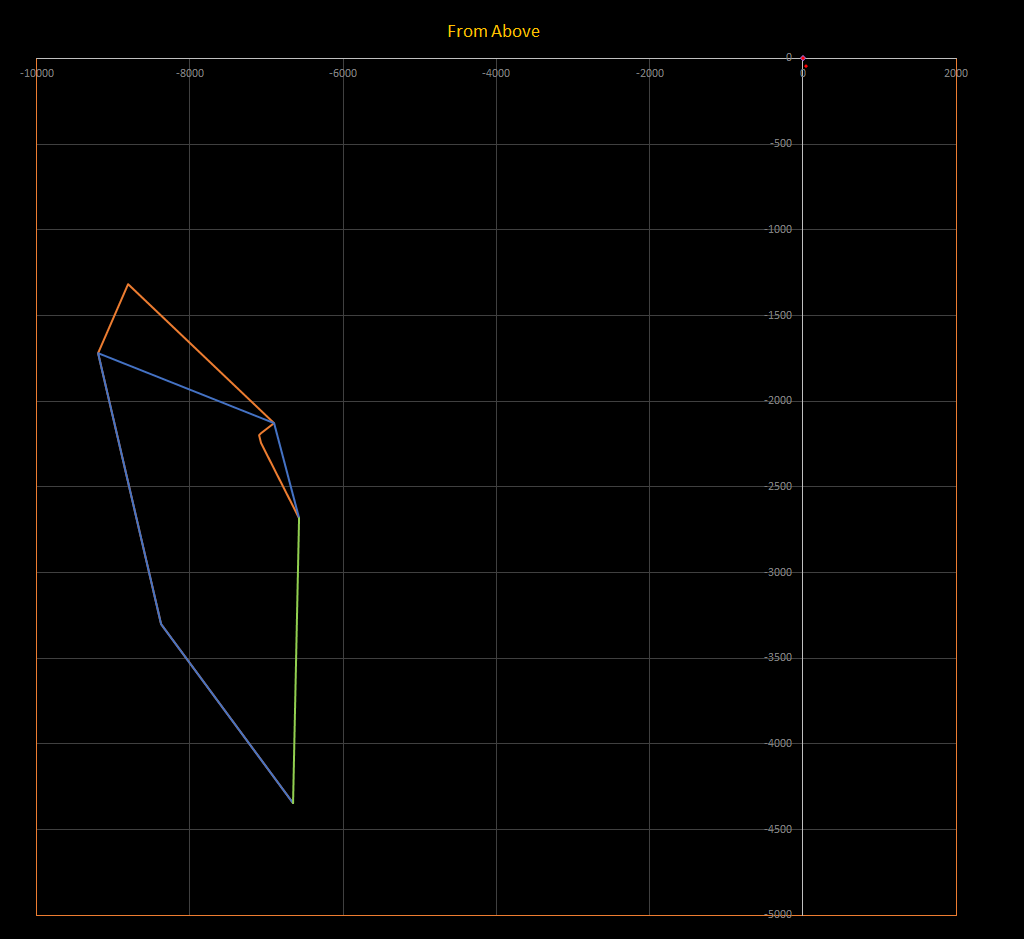
Basecamp Line: 1,895.03 Ly
Main Waypoints: 7,233.41 Ly
Optional Waypoints: 7,894.04 Ly
Map, (click for full size):
Basecamp: Bubble Sector PD-S B4-4
Main Waypoints
- Map References quick reference list, more details below
- NGC 7538 Sector LC-V c2-17
- CSI+50-22218
- NGC 7380 MOF 10
- Bubble Sector PD-S B4-4
Main Waypoints Details
- Map Reference: NGC 7538 Sector LC-V c2-17
- POI: NGC 7538
- NGC 7538 is a diffuse nebula in the Cepheus region of the sky as seen from Earth. It is home to the biggest yet known protostar accretion disk NGC 7538S, being 300 times the radius of our own solar system. This protostar however is not featured in the in-game galaxy. Other than NGC 7538S most stars in the cluster are low-mass pre-main-sequence stars.
Multiple SIMBAD Links are relevant for this waypoint: - SIMBAD Link
- EDSM Link
- Map Reference: CSI+50-22218
- POI: IC 5217
- IC 5217 is a planetary nebula in the Lacerta constellation region os the sky as seen from Earth. This nebula was first discovered in 1904 by Williamina Fleming. The central star, CSI+50-22218 is a Wolf-Rayet star with spectral type WC7.
- SIMBAD Link
- EDSM Link
- Map Reference: NGC 7380 MOF 10
- POI: NGC 7380
- NGC 7380 is a young open cluster in the Cepheus constellation of the sky as seen from Earth. It was first discovered by Caroline Herscel in 1787. It is contained within the emission nebula known as Wizard Nebula.
There are only three stars of this cluster in the in-game galaxy version of the cluster, NGC 7380 MOF 10, NGC 7380 21, and NGC 7380 MOF 9, so the other two have been listed as additional waypoints for reference.
NGC 7380 MOF 10 and NGC 7380 MOF 9 are both variable stars, whereas NGC 7380 21 is not a variable star.
The SIMBAD link for the NGC 7380 cluster as a whole is: https://simbad.u-strasbg.fr/simbad/sim-basic?Ident=NGC+7380 - SIMBAD Link
- EDSM Link
- Map Reference: Bubble Sector PD-S B4-4
- POI: Bubble Nebula
- The Bubble Nebula, also known as NGC 7635 is an emission nebula in the Cassiopeia region of the sky. It is formed from stellar wind from the central star BD+60 2522. (For whatever reason however in the in-game galaxy it placed that star nearly 5,000 Ly away from the bubble nebula)
While BD+60 2522 is around two million years old, the Bubble Nebula is only about 40,000 years old. It is hypothesised that the bubble formed as a shock front where stellar wind meets interstellar material at supersonic speeds as the wind from the star travels outwards at between 1,800 to 2,500 kilometers per second.
Multiple SIMBAD links are relevant to this waypoint: - SIMBAD Link
- EDSM Link
Additional Waypoints
- Map References quick reference list, more details below
- NGC 7538 Sector LC-V c2-17
- CSI+50-22218
- Ootosps UR-H d11-17
- NGC 7380 MOF 10
- NGC 7380 21
- NGC 7380 MOF 9
- NGC 7380 Sector WC-D b15-3
- Bubble Sector PD-S B4-4
Optional Waypoints Details
- Map Reference: Ootosps UR-H d11-17
- POI: (NC) Four Strings
- This system is the GEC POI named “Four Strings” submitted by CMDR EekaDroid on behalf of CMDR Gallaghar.
Summary: An extreme rarity: four Earth-like worlds, in three different orbital configurations.
Description: Systems which house four Earth-like Worlds are extremely rare: only five are known as of 3309/05/12, including this one.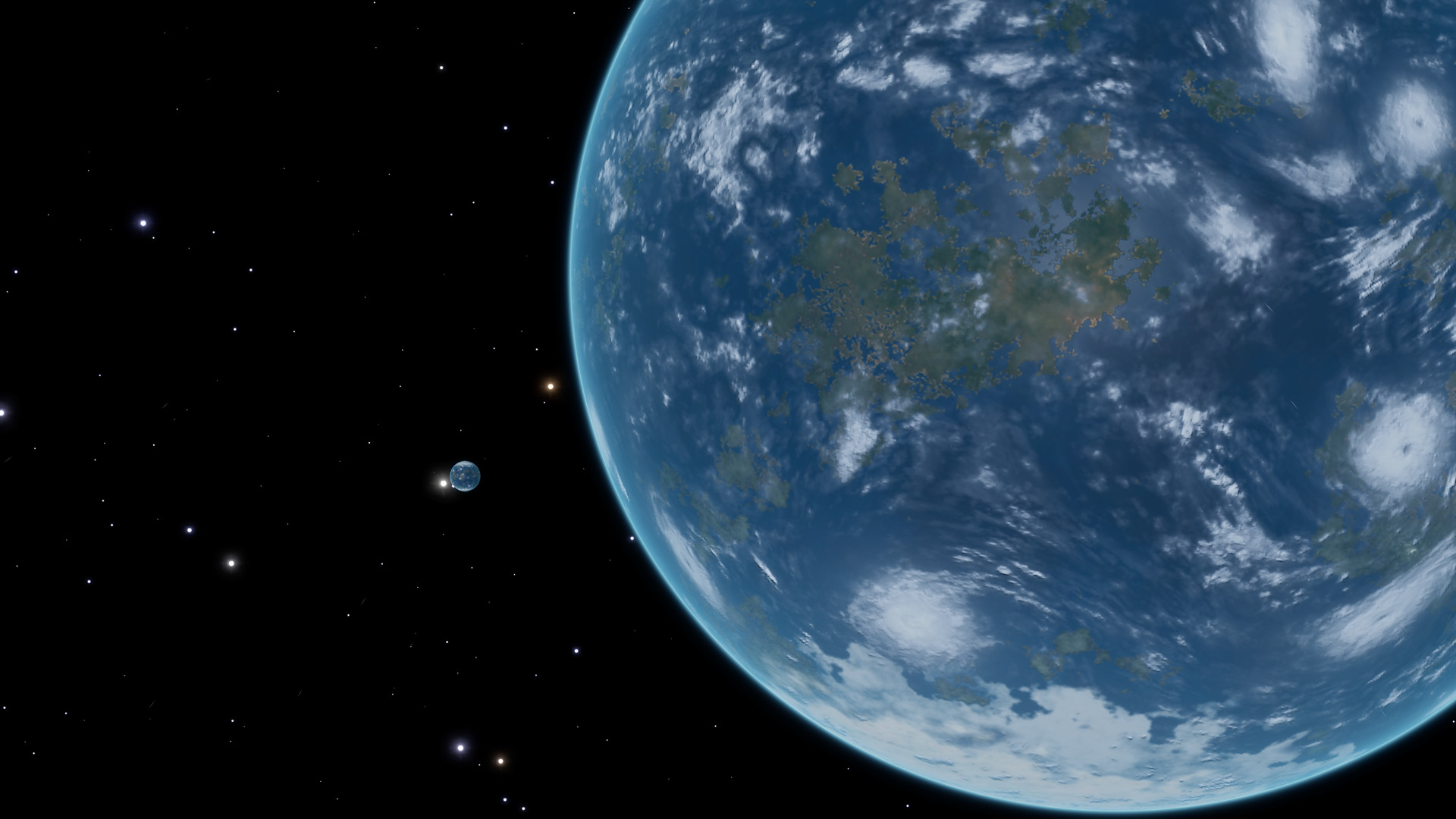
There are five stars in the system, each with their own assortment of planets.
The first one is a class A blue-white star, which has a number of planets. The Earth-like world around this one (A 7) is quite hospitable, but the other planets have extremely hot and thick atmospheres.
The second star has two Earth-likes (B 3 & 4), as a close-orbiting binary pair:
For some added variety, the fourth Earth-like World in the system, DE 4, has a landable rocky moon of its own.
Additionally, there are six terraformable High Metal Content worlds around the various stars.
Lastly, there are two Water Worlds in the system, which are unfortunately not terraformable. Still, they provide some welcoming views, with their atmospheres (Ammonia and Nitrogen, respectively) shifting the colour of the blue oceans. - EDAstro Link
- Map Reference: NGC 7380 21
- POI: NGC 7380
- NGC 7380 is a young open cluster in the Cepheus constellation of the sky as seen from Earth. It was first discovered by Caroline Herscel in 1787. It is contained within the emission nebula known as Wizard Nebula.
There are only three stars of this cluster in the in-game galaxy version of the cluster, NGC 7380 MOF 10, NGC 7380 21, and NGC 7380 MOF 9, so the other two have been listed as additional waypoints for reference.
NGC 7380 MOF 10 and NGC 7380 MOF 9 are both variable stars, whereas NGC 7380 21 is not a variable star.
The SIMBAD link for the NGC 7380 cluster as a whole is: https://simbad.u-strasbg.fr/simbad/sim-basic?Ident=NGC+7380 - SIMBAD Link
- EDSM Link
- Map Reference: NGC 7380 MOF 9
- POI: NGC 7380
- NGC 7380 is a young open cluster in the Cepheus constellation of the sky as seen from Earth. It was first discovered by Caroline Herscel in 1787. It is contained within the emission nebula known as Wizard Nebula.
There are only three stars of this cluster in the in-game galaxy version of the cluster, NGC 7380 MOF 10, NGC 7380 21, and NGC 7380 MOF 9, so the other two have been listed as additional waypoints for reference.
NGC 7380 MOF 10 and NGC 7380 MOF 9 are both variable stars, whereas NGC 7380 21 is not a variable star.
The SIMBAD link for the NGC 7380 cluster as a whole is: https://simbad.u-strasbg.fr/simbad/sim-basic?Ident=NGC+7380 - SIMBAD Link
- EDSM Link
- Map Reference: NGC 7380 Sector WC-D b15-3
- POI: (NC) Waltz of Castor & Pollux
- This system is the GMP POI known as “Waltz of Castor & Pollux” which is described as follows: Castor (planet 1) and Pollux (planet 2) are both landable HMC worlds with beautiful rings and contain geological sites. Castor has a small moon (1A) with mountains. Those three bodies are orbiting their M class star at only 8.3LS, and both planets have a tiny orbital period of 0.7 days, with the moon orbiting in just 0.3 days.
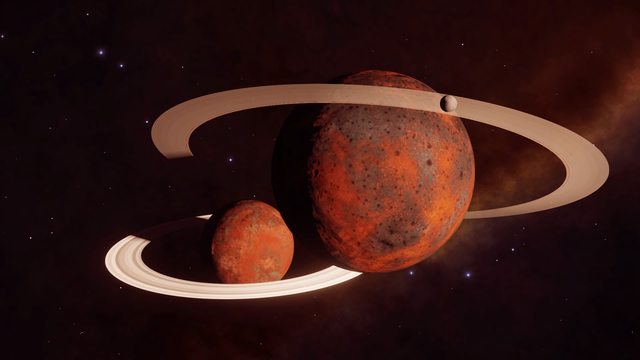
Castor & Pollux are twins brother In Greek mythology, they share a bond so strong that when Castor dies, Pollux gives up half of his immortality to be with his brother. Considering that those 2 bodies are very close each other, we can see them as inseparable twin brother. The idea of the “waltz” is to represent the movement of their small and circular orbital periods.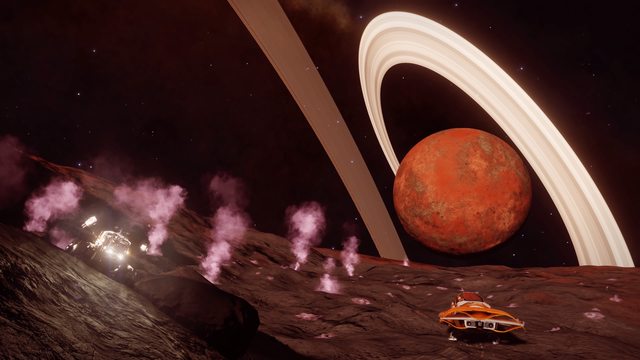
- EDSM Link