For Leg 8 we are getting back into more explored space with more points of interest to hit, and we also have a project for the group! Colonization of Early Astronomy!
Colonization efforts have reached Heart & Soul Nebulae and we would like to make a deep space exploration depot for our faction, C.E.A. Psychiatric Institutions Ltd. in the Soul Nebula. The claim has already been set down in Heart Sector IH-V c2-2
- Anchors
Dates
Start Date: August 2, 2026
End Date: August 9, 2026
Distances
Basecamp Line: 4,752.25 Ly
Main Waypoints: 5,618.35 Ly
Optional Waypoints: 7,908.67 Ly
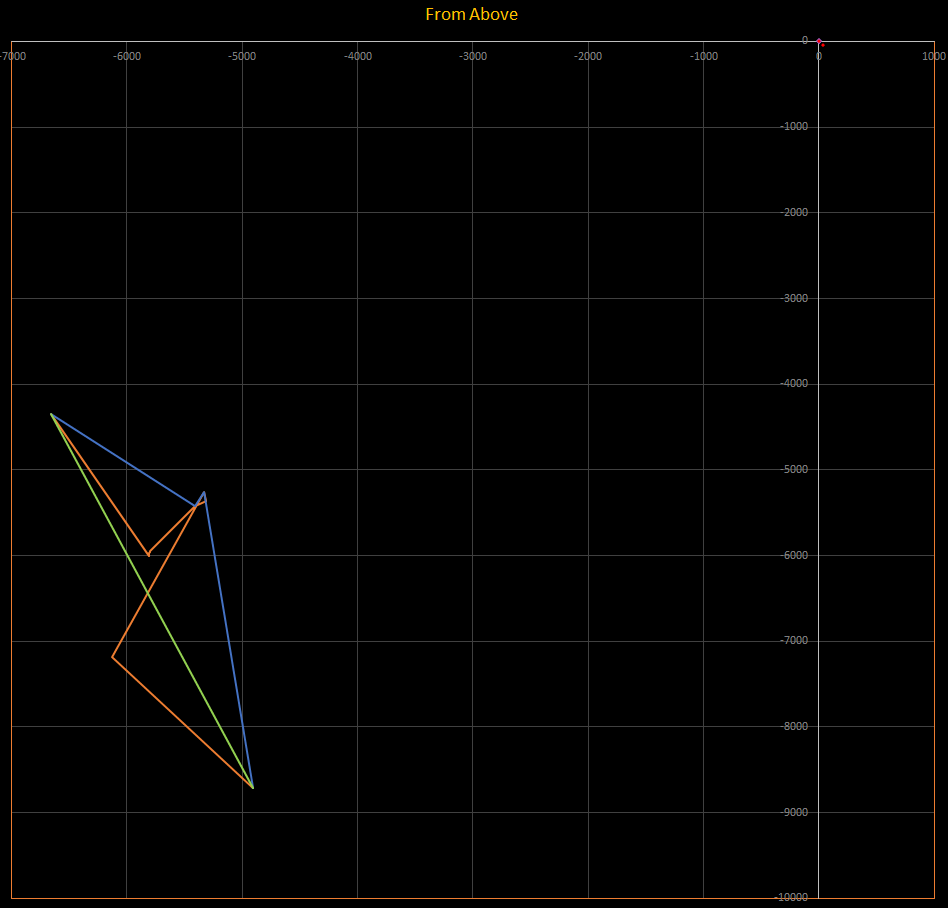
Map, (click for full size):
Basecamp: BD+55 191
Main Waypoints
- Map References quick reference list, more details below
- Heart Sector IH-V c2-2
- RS Persei
- BD+55 191
Main Waypoints Details
- Map Reference: Heart Sector IH-V c2-2
- POI: Heart and Soul Nebulae + Project Colonization of Early Astronomy
- This is a pair of nebulae very close to each other. First is the Heart Nebula, aka Westerhout 4. An emission nebula in the Persues Arm of the Mily Way, and in the Cossiopeia constellation of the sky. Within the nebula is a bright open cluster of stars known as Collinder 26 and contains a few bright stars nearly 50 times the mass of our sun, as well as many more dim stars. The size of the nebula in the night sky is nearly 2 degrees of arc, making it nearly four times the size in the night sky as the full moon.
The second nebula is the Soul Nebula, also known as Westerhout 5. It is also an emission nebula like the Heart Nebula. Near the nebula in the night sky can also be seen the galaxies Maffei 1 and Maffei 2 of the Maffei Group. Soul Nebula is one of the most studied nebula in the field of star formation, due to it’s angle to us and ease of seeing the gas cavities and stellar formation areas allowing sceintists to easily see how gas cavities formed from the stellar winds of a star’s birth compress gasses together from other cavities leading to a chain reaction of stellar formation.
The nebulae as a pair are known as the W3/W4/W5 Region.
Multiple SIMBAD Links are relevant to this waypoint:- Heart Nebula: https://simbad.u-strasbg.fr/simbad/sim-basic?Ident=Heart+Nebula
- Soul Nebula: http://simbad.u-strasbg.fr/simbad/sim-basic?Ident=Sh+2-199
- Collinder 26: http://simbad.u-strasbg.fr/simbad/sim-basic?Ident=Collinder+26
- W3/W4/W5 Region: https://simbad.u-strasbg.fr/simbad/sim-id?Ident=W3%2FW4%2FW5+Region
- Maffei Group: http://simbad.u-strasbg.fr/simbad/sim-basic?Ident=Maffei+Group
- Project Colonization of Early Astronomy
- Our “Colonization of Early Astronomy” project is located in this system. We are aiming to build a Coriolis station in this system with a relay installation strong link to enable Universal Cartographics and Vista Genomics at a deep space station for our minor faction, C.E.A. Psychiatric Institutions Ltd. Be a part of building a lasting legacy for Celebration of Early Astronomy 8!
The Raven Colonial page for the project can be found at https://ravencolonial.com/#sys=Heart%20Sector%20IH-V%20c2-2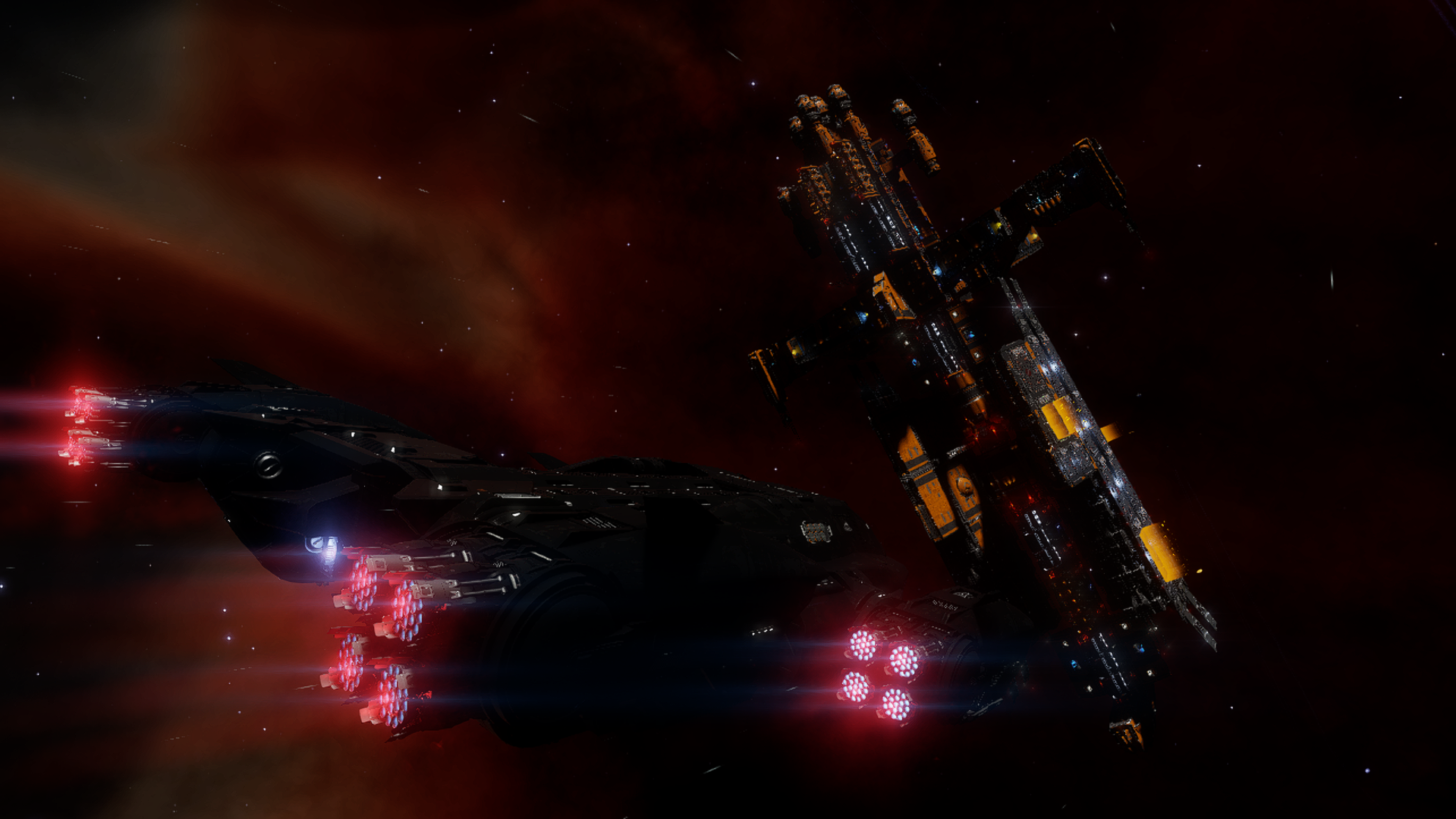
- Our “Colonization of Early Astronomy” project is located in this system. We are aiming to build a Coriolis station in this system with a relay installation strong link to enable Universal Cartographics and Vista Genomics at a deep space station for our minor faction, C.E.A. Psychiatric Institutions Ltd. Be a part of building a lasting legacy for Celebration of Early Astronomy 8!
- SIMBAD Link
- EDSM Link
- Map Reference: RS Persei
- POI: NGC 884 Cluster
- Red Supergiant located in the Double Cluster in the Perseus constellation. In the game galaxy version it is orbited by a landable planet so close that you can fuel scoop while in orbital flight.
Caldwell 14 also known as NGC 884, or Chi Persei is an open cluster in the Perseus constellaton region of the sky as seen from Earth. it is the east component of the Double Cluster with NGC 869, also known as h Persei. The clusters were first recorded by Hipparchus of Nicaea at an unknown specific date sometime during his estimated lifetime between roughly 190 and 120 BC. - SIMBAD Link
- EDSM Link
- Map Reference: BD+55 191
- POI: NGC 281
- NGC 281, also known as Pacman Nebula is an emission nebula in the Cassiopeia region of the sky as seen from Earth. It was dirst discovered by Edward Emerson Barnard in August 1883.
- SIMBAD Link
- EDSM Link
Additional Waypoints
- Map References quick reference list, more details below
- Phrio Hypue AA-A h0
- Heart Sector IH-V c2-2
- Heart Sector YJ-A c9
- RS Persei
- Eafots RA-G B11-0
- Eafots LZ-H B10-0
- Eafots EU-R C4-1
- Eafots GL-Y E2
- BD+55 191
Optional Waypoints Details
- Map Reference: Phrio Hypue AA-A h0
- POI: (NC) Three Angels of Death
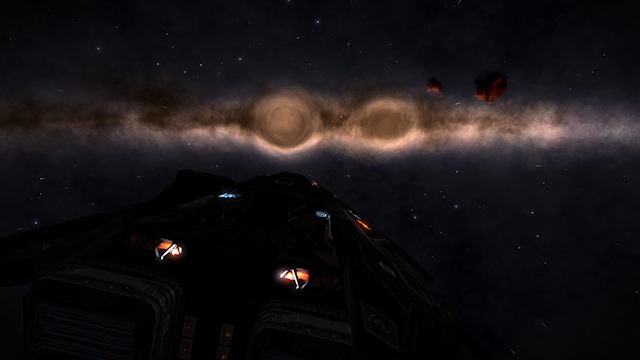
- This system is the GMP POI known as “Three Angel’s of Death”, it is described as such: A system that only contains three black holes. Two of the black holes are less than 0.01 AU from each other and have an orbital period of 0.1 D. The third black hole is fairly close by as well with an orbital period of 4.4 D. The central black hole has the mass of 29 solar masses. The three angels of death are named Abaddon, also called Apollyon, which is the destroying angel in Book of Revelation in the New Testament, Azrael, also known as Malak al-Maut from Islam, and Mot, angel of death from the Hebraic Book of Habakkuk.
- EDSM Link
- Map Reference: Heart Sector YJ-A c9
- POI: (NC) Mount Pallas
- This system is the GMP POI known as Mount Pallas. Described as:
Planetary Coordinates: -75.1632, 175.7912 Discovered during the Artemis Biological Survey expedition, this particular mountain range of the system’s fifth body (A5) can be seen from space. At very high altitudes, the icy pole of the planet can be seen surrounded by the mountain barrier, which ends in a singular peak rising above the horizon, crossing two different biological biomes. It reaches a height of over 9 kilometers. From the top, we can clearly see the different features of the planet. However, this is only accessible with a small ship. On the other side is a dark plain as far as the eye can see. But, if you look up to the sky you can see a beautiful starry sky and Heart and Soul nebulae.
Located on a high metal content stellar body, the surface temperature varies between 116k and 227k. Atmosphere type is carbon dioxide (99.0% carbon dioxide and 1.0% sulphur dioxide). It is composed of three different exobiological species rather common in worlds of the same type (Tussock Ignis, Stratum Tectonicas, Bacterium Aurasus).
Named Mount Pallas in reference to Greek mythology. Pallas was one of the Gigantes (Giants), the offspring of Gaia, born from the blood of Uranus. According to the mythographer Apollodorus, during the Gigantomachy, the cosmic battle of the Giants with the Olympian gods, he was flayed by Athena. If you fall from above, there is a risk of flaying. Caution should be exercised.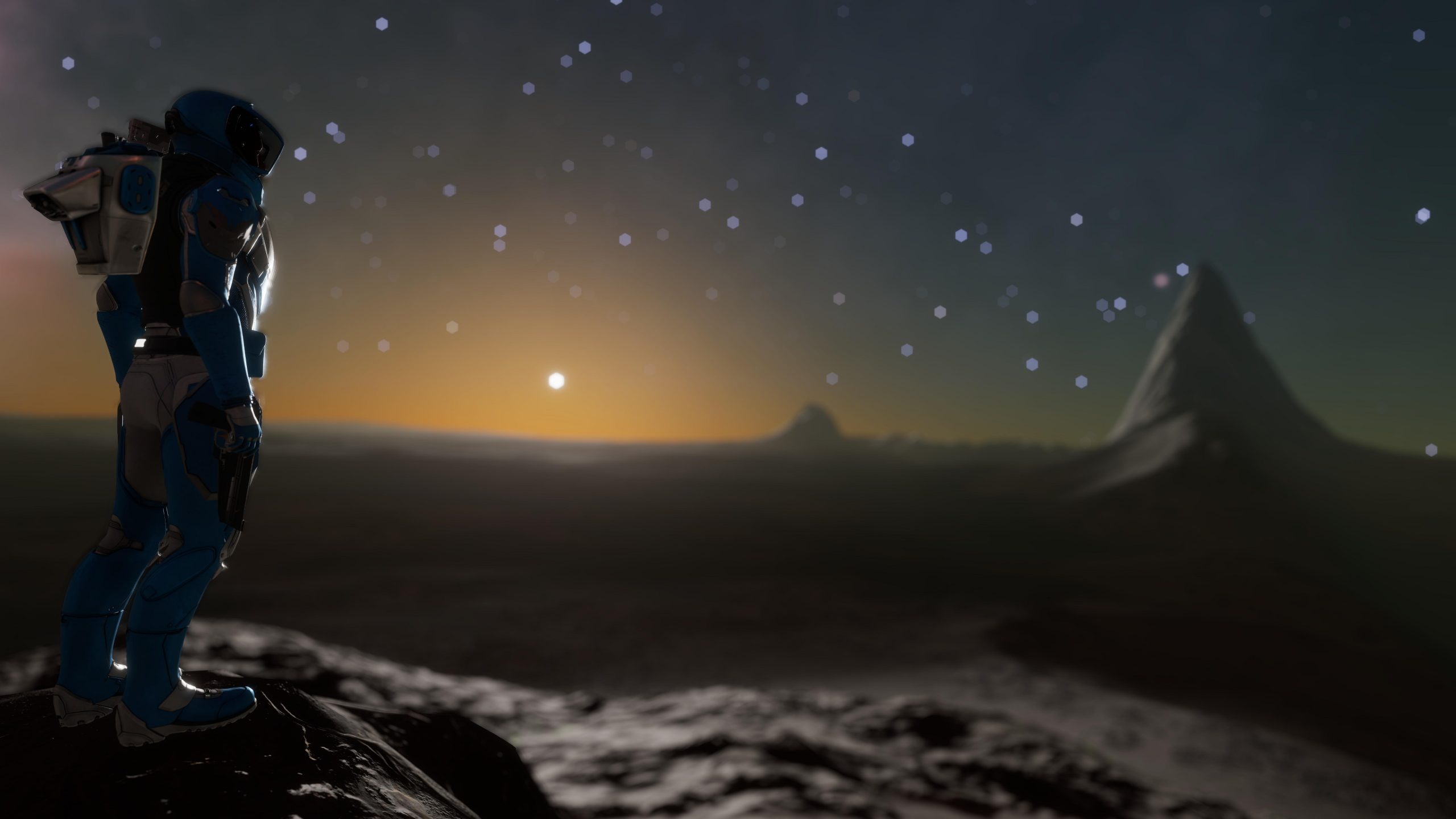
- EDSM Link
- Map Reference: Eafots RA-G B11-0
- POI: (NC) Formidine Rift Gamma Settlement
- One of four lore related abandoned settlements out in the Formidine Rift region related to the lore of The Club.
A badge is able to be unlocked for users of EDSM by visiting any system within the “Eafots” sector, which this system would count for. - EDSM Link
- Map Reference: Eafots LZ-H B10-0
- POI: (NC) Formidine Rift Beta Settlement
- One of four lore related abandoned settlements out in the Formidine Rift region related to the lore of The Club.
A badge is able to be unlocked for users of EDSM by visiting any system within the “Eafots” sector, which this system would count for.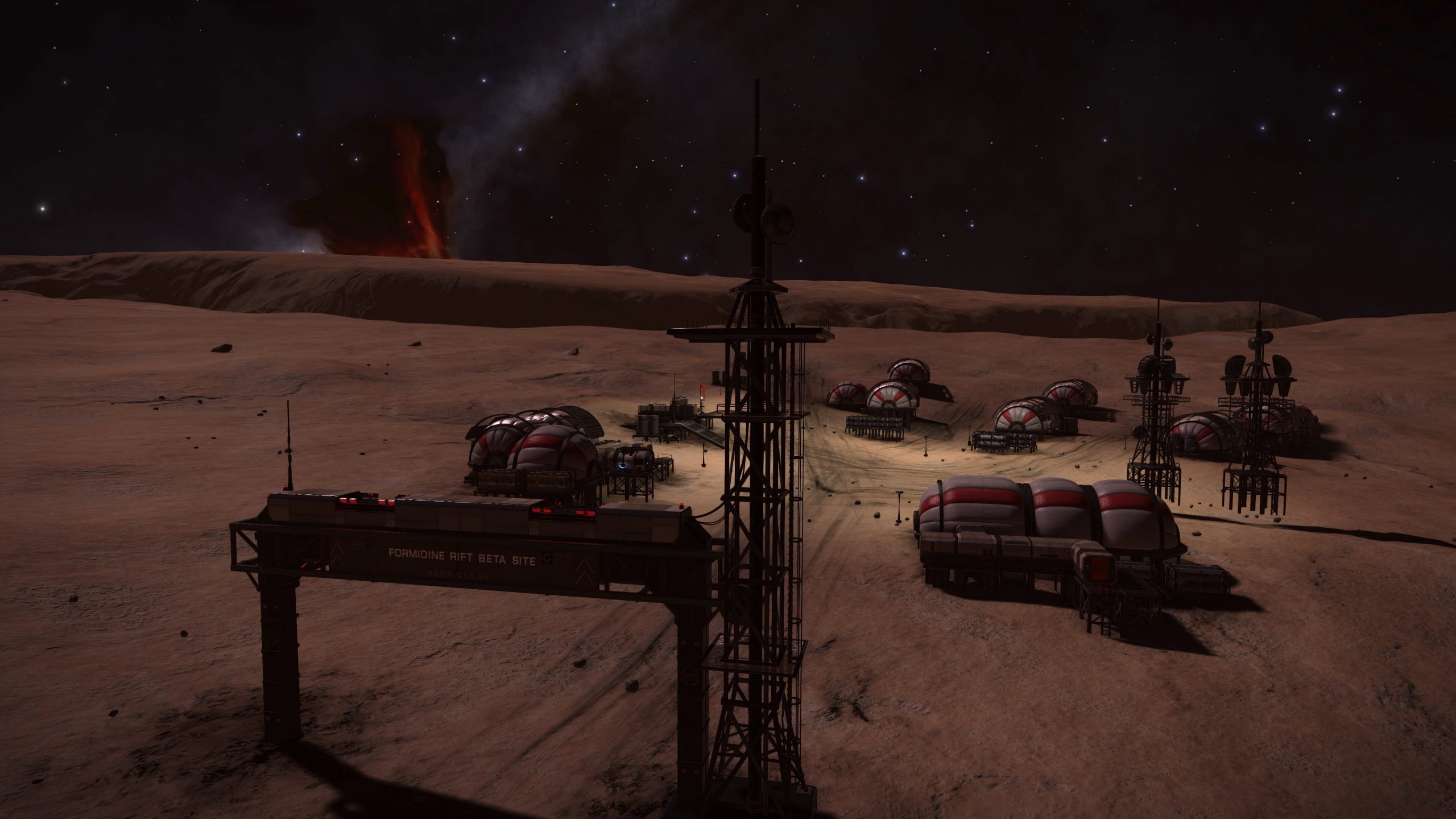
- EDSM Link
- Map Reference: Eafots EU-R C4-1
- POI: (NC) Formidine Rift Alpha Settlement
- One of four lore related abandoned settlements out in the Formidine Rift region related to the lore of The Club.
- A badge is able to be unlocked for users of EDSM by visiting any system within the “Eafots” sector, which this system would count for.
- EDSM Link
- Map Reference: Eafots GL-Y E2
- POI: (NC) Formidine Rift Delta Settlement
- One of four lore related abandoned settlements out in the Formidine Rift region related to the lore of The Club.
A badge is able to be unlocked for users of EDSM by visiting any system within the “Eafots” sector, which this system would count for. - EDSM Link