We start off Celebration of Early Astronomy 8 from one of our colony systems, Algenib, which is a major star of the Pegasus constellation. We will then begin southward making our way through various nebulae away from the bubble.
- Anchors
Dates
Start Date: June 7, 2026
End Date: June 14, 2026
Distances
Basecamp Line: 1,956.83 Ly
Main Waypoints: 4,573.60 Ly Ly
Optional Waypoints: 5,787.13 Ly
Map, (click for full size):
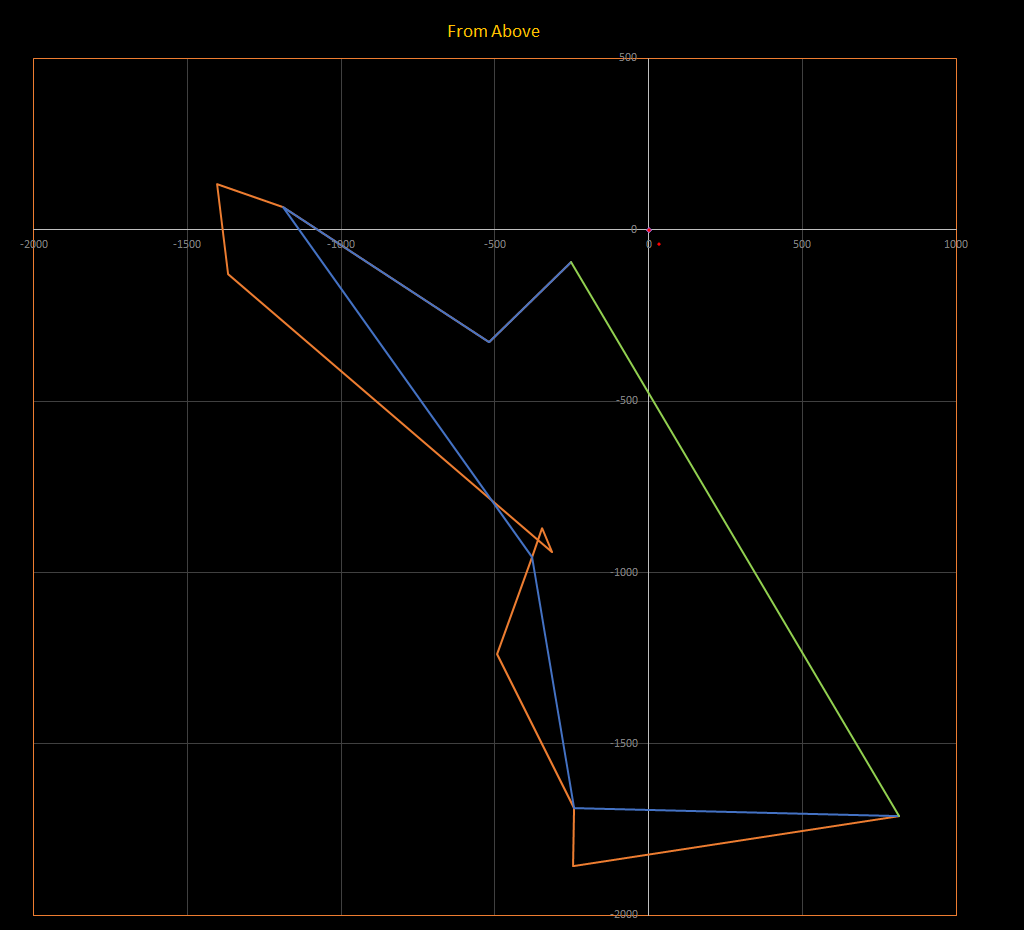
Basecamp: Epsilon Orionis
Main Waypoints
- Map References quick reference list, more details below
- Algenib
- HIP 3289
- HIP 102082
- Volkov
- Flaming Star Sector LX-T b3-0
- Epsilon Orionis
Main Waypoints Details
- Map Reference: Algenib
- POI: Gamma Pegasi
- Algenib, also known as Gamma Pegasi is a binary system in the Pegasus constellation and part of the asterism, represetnting the wing of the Pegasus at the southeast corner. Historically Algenib was also used as the name for Alpha Persei as well, however in 2016 the Internaional Astronomical Union formalized that Algenib will be specifically for Gamma Pegasi.
Algenib experiences small rapid variations in it’s brigtness and as such is classified as a Beta Cephei Variable star. The pulsations have a period of 3.6 hours.
The primary star of the system is 8.8 times as massive as our own sun (although in-game it is set as 15) and 5.5 times the sun’s radius (roughly accurate in-game) and is a B2 IV subgiant star. Not much is known about the secondary star of the system beyond that it has a 85.6±0.1 microarcsecond seperation from the main star.
The photo taken by Artemis II astronauts of the moon eclipsing the sun in April 2026 features Algenib prominently as a particulary bright star to the top right of the moon. https://www.nasa.gov/image-detail/amf-art002e009301/ - EDSM Link
- SIMBAD Link
- Map Reference: HIP 3289
- POI: LBN 623
- LBN 623 Nebula, also known as IC 59, is a dark purple emission nebula. It has also been called the Gamma Cassiopeiae nebula due to visual proximity of that bright star and the nebula as seen from old Earth. It is the nearest photodissociation region to our solar system. Photodissociation regions are regions of interstellar medium where far-ultraviolet photons strongly influence the gas chemistry and act as the most important source of heat. They occur in any region of interstellar gas that is dense and coldenough to remain neutral (electrically), but has too low of a density to prevent far-ultraviolet photons from penetrating.
- EDSM Link
- SIMBAD Link
- Map Reference: HIP 102082
- POI: V Cygni
- A very large carbon star with only twice the mass of our sun, but nearly 200 times the size of our sun. It is located 271 parsecs from our own solar system. Additionally it is a Mira Variable star, which are pulsating stars characterized by very red colors, pulsation periods longer than 100 days, and amplitudes greater than one magnitude in infrared spectrum and 2.5 magnitude within the visible spectrum. The large visual amplitudes are not due to actual luminosity changes, but shifting of their output between the infrared and visual wavelengthsas that star changes temperature during the pulsations.
- EDSM Link
- SIMBAD Link
- Map Reference: Volkov
- POI: NGC 1333 Cluster and Nebula
- NGC 1333 is a star forming region and reflection nebula located in the Perseus constellation region of the sky. It was first discovered by Eduard Schönfeld in 1855. This star formation region contains various low mass stars below 10 times the mass of Jupiter and has been studied for how stars of such low mass are formed. So far it has been noted that many of them form like planets and sometimes get ejected from their formation systems. It has also been seen that there are none below 4 times the mass of Jupiter, leading the hypothesis that the lower limit of stellar formation could be near that point.
- EDSM Link
- SIMBAD Link
- Map Reference: Flaming Star Sector LX-T b3-0
- POI: Flaming Star Nebula
- Flaming Star Nebula, also known as IC 405 and Caldwell 31 is an emission and reflectoin nebula roughly 1,500 Ly away from our own solar system in real life (1,700 in-game) in the Auriga constellation region of the sky. It surrounds the star AE Aurigae (although for some reason that is about 200 Ly away in-game). Based on its proper motion, the central star, AE Aurigae is believed to have been a star ejected from the Orion Nebula from a collision of a pair of binary star pairs.
- EDSM Link
- SIMBAD Link
- Map Reference: Epsilon Orionis
- POI: Alnilam, Orion’s Belt
- More commonly known as Alnilam, this is the center star of the Orion’s Belt asterism. It is a decent bit further (in-game) from our solar system than the other two stars of Orion’s Belt (Alnitak and Mintaka). It is the 29th brightest star in the night sky and the fourth brightest star in the Orion constellation.
- EDSM Link
- SIMBAD Link
Additional Waypoints
- Map References quick reference list, more details below
- Algenib
- HIP 3289
- HIP 102082
- Alpha Cygni
- HD 239486
- HD 25508
- 2MASS J03292407+3119577
- Volkov
- Schweickart
- Flaming Star Sector LX-T b3-0
- AE Aurigae
- Epsilon Orionis
Optional Waypoints Details
- Map Reference: Alpha Cygni
- POI: Deneb
- The brightest star in the Cygni constellation, and 19th brightest star in the night sky. It represents the tail of the swan in the Cygnus constellation. This star is the star ionizing the North America Nebula and Pelican Nebula. Was also featured multiple times in the science fiction series Star Trek.
- EDSM Link
- SIMBAD Link
- Map Reference: HD 239486
- POI: Cepheus Dark Region
- The Cepheus portion of the sky is home to a selection of various dark nebulae such as the Seahorse Nebula and Cave Nebula. These nebulae are not energetic enough to emit their own light, and so appear dark and obscure stars behind them.
- EDSM Link
- SIMBAD Link
- Map Reference: HD 25508
- POI: California Nebula
- The California Nebula, also known as NGC 1499 is an emission nebula in the Perseus constellation, named due to it’s resemblance to the outline of the US State of California. (granted in game it’s a generic nebula). It was discovered in 1884 by E. E. Barnard and is roughly 1000 lightyears from our own solar system. Its flourescence is due to the nearby energetic star Xi Perrsei, also known as Menkib, which is the next waypoint on the route.
Be aware that Thargoids hyperdictions may occur in California Nebula! - EDSM Link
- SIMBAD Link
- Map Reference: 2MASS J03292407+3119577
- POI: NGC 1333 Start
- System on one end of the NGC 1333 cluster used as a main waypoint to show the length of the cluster.
- EDSM Link
- SIMBAD Link
- Map Reference: Schweickart
- POI: NGC 1333 Cluster End
- System on one end of the NGC 1333 cluster used as a main waypoint to show the length of the cluster.
- EDSM Link
- Map Reference: AE Aurigae
- AE Aurigae is currently the central star of the Flaming Star Nebula, however is was not formed there. It is considered a runaway star, believed to have been ejected from the Orion Nebula by a collision of a pair of binary star groups along with 53 Arietis. As such it is passing through Flaming Star Nebula at high speed. This is creating a bow shock which creates my of the high energy electromagnetic radiation lighting up the Flaming Star Nebula.
- EDSM Link