For the second leg of Celebration of Early Astronomy 8 we will be continuing out from Orion’s Belt southward as we visit a few planetary nebulae as well as a few exoplanets while looking for new discoveries along the way, finally arriving to Seagull Nebula where one of the original deep space outpost asteroid bases is located.
- Anchors
Dates
Start Date: June 14, 2026
End Date: June 21, 2026
Distances
Basecamp Line: 2,161.83 Ly
Main Waypoints: 4,252.56 Ly
Optional Waypoints: 4,774.53 Ly
Map, (click for full size):
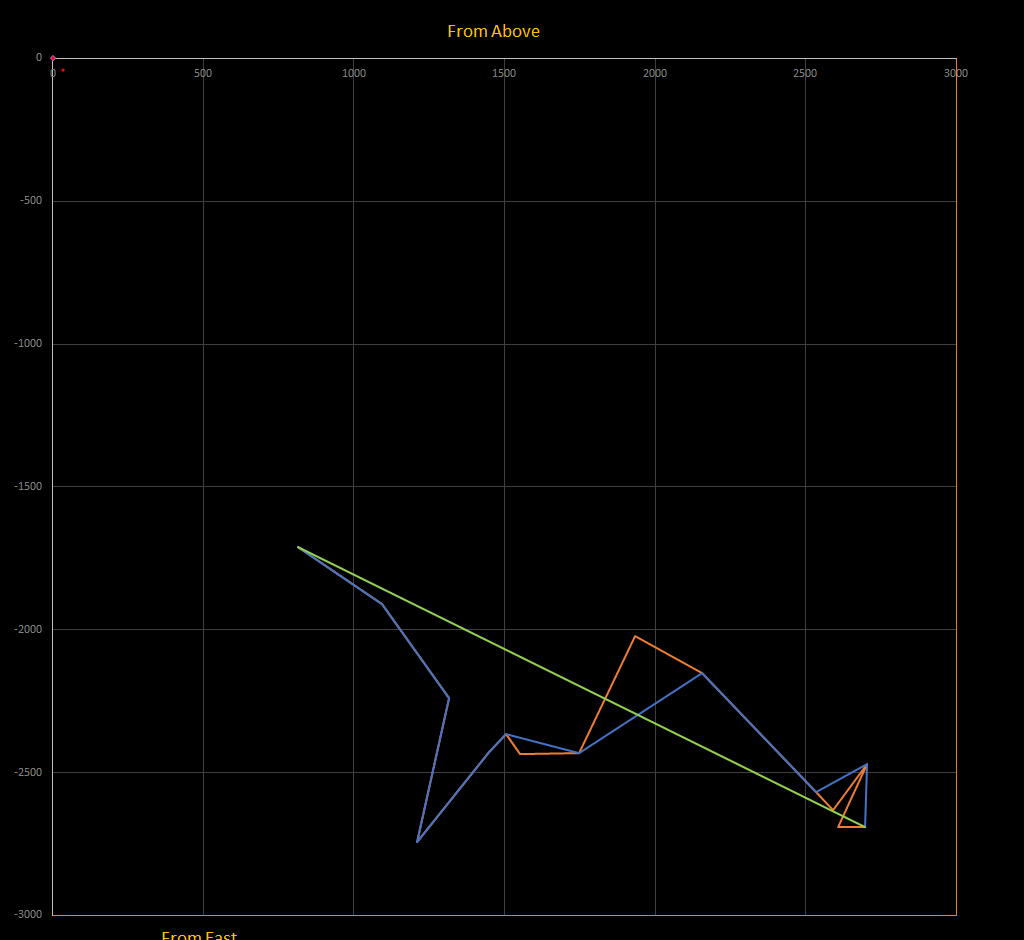
Basecamp: Seagull Sector MC-V c2-6
Main Waypoints
- Map References quick reference list, more details below
- 44 Iota Orionis
- CoRoT-19
- R Monocerotis
- CoRoT-18
- TYC 148-1894-1
- V651 Monoceros
- FN Canis Majoris
- 2MASS J07133240-1018380
- ALS 299
- Seagull Sector MC-V c2-6
Main Waypoints Details
- Map Reference: 44 Iota Orionis
- Iota Orionis also known as 44 Orionis (Elite does this strange thing sometimes combining the Bayer and Flamsteed designations into one) is the 8th brightest star in the Orion constellation and the brightest of the Orion’s Sword asterism with an apparent visual magnitude of 2.77. The main star of the system is an O class giant star, with the secondary star being a variable B class star, also known as V2451 Orionis. Iota Orionis is also believed to have been ejected from the Orion Nebula region in the same collision event as AE Aurigae.
- SIMBAD Link
- EDSM Link
- Map Reference: CoRoT-19
- POI: POI Info if applicable
- CoRoT-19b is a confirmed exoplanet in a system within the Monoceros constellation region of the sky, orbiting an F-class main sequence star. Information for it is available on the NASA exoplanet archive at https://exoplanetarchive.ipac.caltech.edu/overview/CoRoT-19%20b#planet_CoRoT-19-b_collapsible.
- SIMBAD Link
- EDSM Link
- Map Reference: R Monocerotis
- POI: Hubble’s Variable Nebula
- R Monocerotis is a very young binary star system in the Monoceros constellation region of the sky. While in-game it is depicted as an A class star, in real life it is a pre-main sequence Herbig Ae/Be star. This isn’t necessarily inaccurate as Herbig Ae/Be are destined to become A class or B class stars, so this may just mean it reached main sequence beteween 2026 and 3312. In 2026 it is still in the accretion phase and has a circumstellar disk of gas and dust.
It is located within and illuminates a diffuse nebula known as Hubble’s Variable Nebula, also known as NGC 2261, which was first observed by William Herschel in 1783. This nebula varies in brightness, hence the name “variable nebula,” one hypothesis for this is that dense dust clouds near R Monocerotis at times obscure and block some of the light from the star, causing less of it to reach our solar system, therefore dimming the nebula.It is located within and illuminates a diffuse nebula known as Hubble’s Variable Nebula, also known as NGC 2261, which was first observed by William Herschel in 1783. This nebula varies in brightness, hence the name “variable nebula,” one hypothesis for this is that dense dust clouds near R Monocerotis at times obscure and block some of the light from the star, causing less of it to reach our solar system, therefore dimming the nebula. - SIMBAD Link
- EDSM Link
- Map Reference: CoRoT-18
- POI: CoRoT-18b
- CoRoT-18b is a confirmed hot jupiter type exoplanet in the Monoceros constellation region of the sky. It orbits a G class star.
- SIMBAD Link
- EDSM Link
- Map Reference: TYC 148-1894-1
- POI: NGC 2301 Cluster Start
- NGC 2301 is an open cluster in the Monoceros constellation region of the sky, first discovered by William Herschel in 1786.
- SIMBAD Link
- EDSM Link
- Map Reference: V651 Monoceros
- POI: Butterfly Nebula
- NGC 2346 is also known as the Butterfly Nebula is a bipolar planetary nebula in the Monoceros constellation region of the sky. However, since Butterfly Nebula is an informal name, it is not to be confused with the other informally named Butterfly Nebula in the Scorpius constellation, which is also a bipolar nebula.
This Butterfly Nebula centers around the binary star system of V651 Monoceros with an A-type subgiant and an O-class subdwarf. (in-game the second star is depicted as an M class though.) - SIMBAD Link
- EDSM Link
- Map Reference: FN Canis Majoris
- FN Canis Majoris is a binary star system in the Cnais Major constellation of the sky. In 1967 is was observed to be variable by Graham Hill and designated as a Beta Cpehei Variable Star, with apparent magnitude varying between +5.38 and +5.42 in a period of 36.7 hours. However a 2005 study has rejected it as variable enough to be a Beta Cephei Variable Star, and it is no longer considered to be one.
- SIMBAD Link
- EDSM Link
- Map Reference: 2MASS J07133240-1018380
- POI: NGC 2353 Cluster Start
- NGC 2353 is a loosely bound open cluster in the Monoceros constellation region of the sky. The main star of it HIP 34999 however does not appear to be in-game under any identifiers for it.
- SIMBAD Link
- EDSM Link
- Map Reference: ALS 299
- POI: Thor’s Helmet
- NGC 2359 also known as Thor’s Helmet Nebula is an emission nebula in the Canis Major constellation region of the sky. The central star is the Wolf-Rayet star WR7, also known as ALS 29, which is current in a pre-supernova stage. The complex shape is thought to be cause by interactions with other nearby molecular clouds.
ALS 299 is the second smallest known Wolf-Rayet N class star in the galaxy, after WR 2. Due to it’s rapid loss of stellar mass creates the nebula around it known as Thor’s Helmet Nebula. - SIMBAD Link
- EDSM Link
- Map Reference: Seagull Sector MC-V c2-6
- POI: Seagull Nebula
- Seagull Nebula, also known as IC 2177 is a nebula lying on the border of the Monoceros and Canis Major constellations of the sky. It was first discovered by Isaac Roberts, and is informally called the Seagull Nebula.
- SIMBAD Link
- EDSM Link
Additional Waypoints
- Map References quick reference list, more details below
- 44 Iota Orionis
- CoRoT-19
- R Monocerotis
- CoRoT-18
- TYC 148-1894-1
- TYC 149-95-1
- V651 Monoceros
- Outotch MB-N c7-1
- FN Canis Majoris
- 2MASS J07133240-1018380
- NGC 2353 FHR 163
- ALS 299
- Seagull Sector DL-Y d3
- Seagull Sector MC-V c2-6
Optional Waypoints Details
- Map Reference: TYC 149-95-1
- POI: NGC 2301 Cluster End
- NGC 2301 is an open cluster in the Monoceros constellation region of the sky, first discovered by William Herschel in 1786.
- SIMBAD Link
- EDSM Link
- Map Reference: Outotch MB-N c7-1
- POI: (NC) Cocijo’s Origin
- This is the system that the Thargoid Titan that was codenamed “Cocijo” first appeared closest to as an anomalous signal when the Titans were approaching the bubble.
- EDSM Link
- Map Reference: NGC 2353 FHR 163
- NGC 2353 is a loosely bound open cluster in the Monoceros constellation region of the sky. The main star of it HIP 34999 however does not appear to be in-game under any identifiers for it.
- SIMBAD Link
- EDSM Link
- Map Reference: Seagull Sector DL-Y d3
- POI: Hell Port, Station in Seagull Nebula
- This sytem in the Seagull Nebula contains the asteroid base known as Hell Port. A good stopover as we continue deeper into space on our expedition.
- EDSM Link